
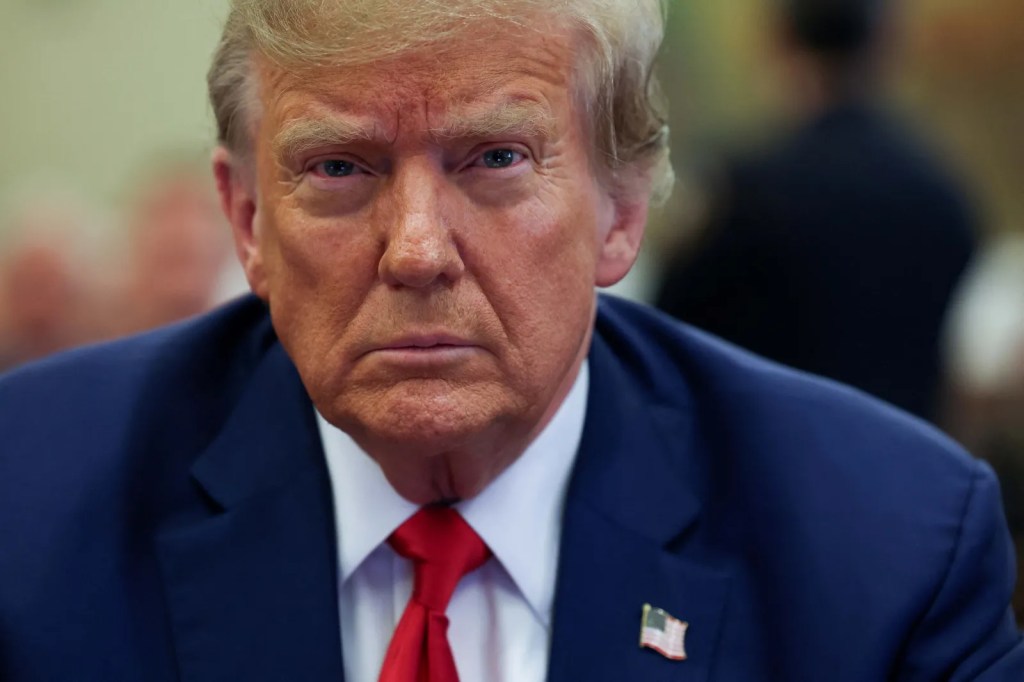
The re-emergence of Donald Trump on the global stage has ushered in a distinctive approach to international relations, characterized by assertive diplomacy and a transactional mindset. This paradigm shift has significant implications for global security dynamics and necessitates a reevaluation of foreign policy strategies – especially for nations like Mongolia that are situated between major powers.
Kuhn’s Paradigm Shift and the Transformation of Global Politics
The philosopher Thomas S.Kuhn, in The Structure of Scientific Revolutions (1962), argued that scientific progress does not occur through gradual accumulation but rather through sudden paradigm shifts that redefine the rules of the game. This concept extends beyond science and is highly applicable to political transformations.
Trumpism represents such a shift in international diplomacy, challenging the long-standing post-Cold War consensus on multilateralism, alliances, and economic globalization.
Traditional diplomacy – rooted in institutional stability and predictable international norms – is being replaced by a transactional, often unilateral approach that prioritizes short-term national interests over long-term global stability. This shift disrupts conventional diplomatic frameworks and forces other nations to adapt to new geopolitical realities.
Trump’s Assertive Diplomacy and Its Global Impact
Trump’s foreign policy is characterized by a focus on national interests, often at the expense of traditional alliances and multilateral agreements. His administration’s emphasis on securing critical minerals, as evidenced by proposals such as the “minerals-for-aid” deal with Ukraine and discussions about acquiring Greenland, underscores a strategic pivot toward resource-centric diplomacy. This approach aims to counterbalance China’s dominance in processing essential minerals vital for military and energy sectors.
In Europe, Trump’s negotiations with Russia, which involved contentious proposals such as having Ukraine cede territory, have sparked debates reminiscent of historical appeasement policies. Critics warn that such actions could undermine NATO’s cohesion and embolden adversarial powers. Furthermore, his administration’s demand that European nations raise defense spending to at least 3% of GDP reflects a push for allies to assume greater responsibility for their security.
Mongolia’s Strategic Position Amidst Shifting Geopolitics
Mongolia, nestled between Russia and China, faces unique challenges in this evolving security environment. The nation’s “third neighbor” policy, which seeks to establish strong ties with countries beyond its immediate neighbors, is crucial for maintaining sovereignty and economic stability. Recent developments, such as the 1.6 billion USD investment agreement with France’s Orano for the Zuuvch-Ovoo uranium mine, highlight Mongolia’s efforts to diversify its economic partnerships and enhance its role in the global uranium supply chain.
However, Mongolia must navigate its relationships carefully. For instance, its decision to reject the construction of the “Power of Siberia-2” gas pipeline, a significant project for Russia, underscores the delicate balance Mongolia maintains between its neighbors. Additionally, hosting Russian President Vladimir Putin in 2024, despite an existing ICC arrest warrant, has placed Mongolia in a complex diplomatic position, reflecting the challenges of upholding international obligations while managing regional relationships.
Cultural Dimensions and Global Political Realignment
The transformations in global politics under Trumpism can also be examined through the lens of the Inglehart-Welzel Cultural Map, which categorizes societies based on their values concerning survival vs. self-expression and traditional vs. secular-rational orientations. Trumpism aligns with a broader resurgence of nationalist and survival-oriented values, challenging the prevailing liberal order that promotes self-expression and global integration.
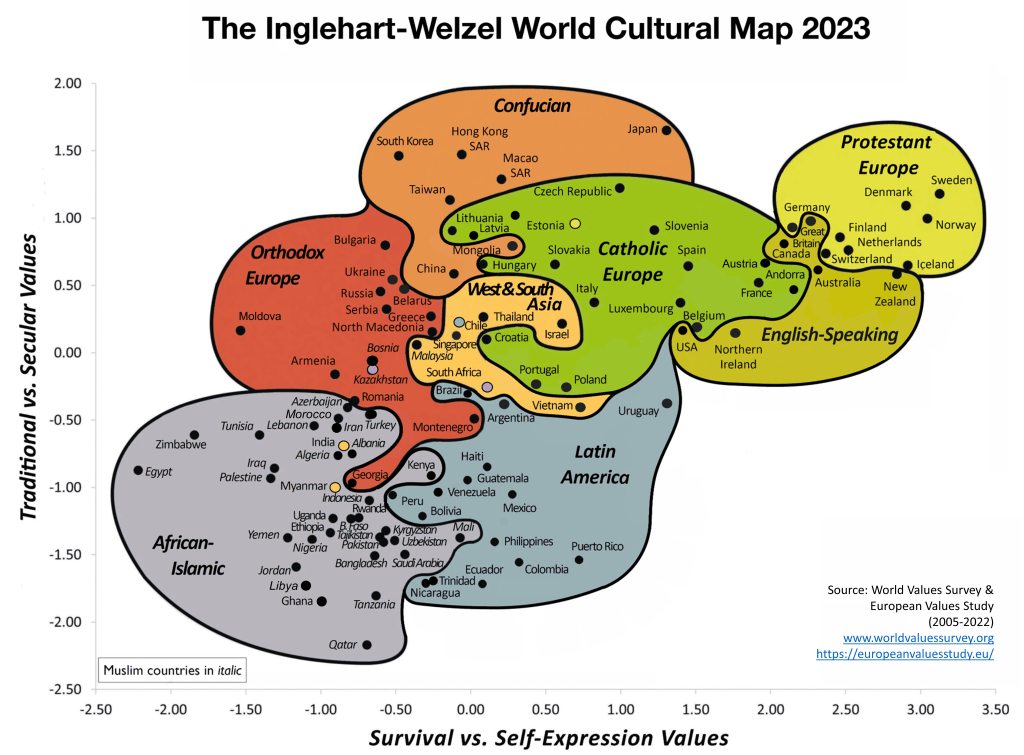
Mongolia’s position on this map is particularly relevant. Traditionally influenced by collectivist and survival values, Mongolia is experiencing a gradual shift toward self-expression and openness as its economy develops and democratic governance strengthens. Balancing these evolving values with pressing geopolitical realities, however, remains a complex challenge.
Adapting to the New Security Paradigm
In response to these challenges, Mongolia is revising its 2010 National Security Concept to address both external and internal security concerns. Proposed amendments aim to strengthen the nation’s legal frameworks, enhance defense capabilities, and promote political stability. This proactive approach is essential as Mongolia contends with the broader implications of assertive global powers and shifting alliances.
Furthermore, Mongolia’s commitment to international cooperation is evident in its participation as an observer in the Shanghai Cooperation Organization (SCO). Engaging with regional platforms allows Mongolia to contribute to collective security efforts and balance its foreign policy objectives amidst competing interests.
Conclusion
Kuhn’s theory of paradigm shifts illustrates how Trump’s foreign policy disrupts established diplomatic norms, forcing nations to reconsider their strategic approaches. The Inglehart-Welzel Cultural Map further provides insight into the ideological undercurrents driving these global changes, showing how shifts in values influence political and diplomatic decisions. The current global landscape, influenced by assertive diplomatic strategies and shifting power dynamics, presents both challenges and opportunities for nations like Mongolia. By reassessing its security policies, diversifying economic partnerships, and engaging in regional cooperation, Mongolia can navigate this new era of international relations while safeguarding its national interests and sovereignty.
Altan L. Bugat
 Арктус Аналитикс ХХК
Leave a comment