

Bolor Lkhaajav, Erdene-Ochir Enkhbayar
This year marks the 75th anniversary of diplomatic relations between Mongolia and Czechia. In celebration of the anniversary, the Mongolian President Khurelsukh Ukhnaa paid an state visit to Czechia, and elevated the two countries relations to a Comprehensive Strategic Partnership level. The elevation of the partnership honors a decades-old historical bonds while strengthening economic mechanisms that will help Mongolia and Czechia to navigate the changing geopolitical shifts in Eastern Europe.
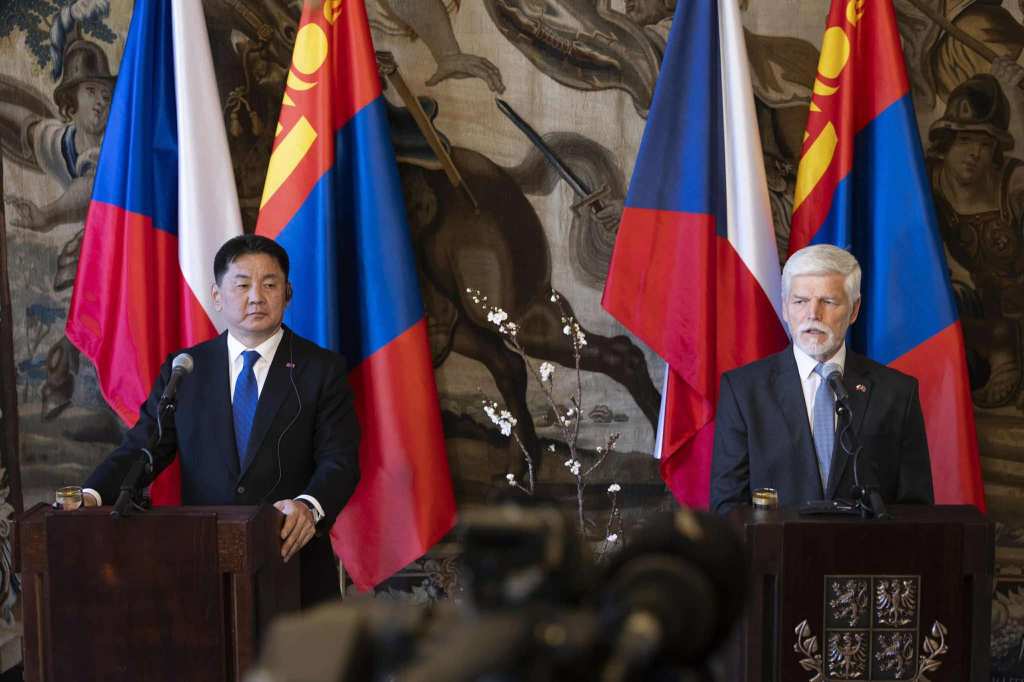
On April 25, 1950, Mongolia and Czech Republic (formerly known as Czechoslovakia) established diplomatic relations. At the time, Czechoslovakia was amongst the five Eastern European nations that established diplomatic ties with Mongolia, Poland, Romania, Bulgaria, and East Germany. Following the dissolution of the USSR and Mongolia’s democratization, Mongolia recognized the Czech Republic in 1993 as an independent state. Despite these historical turning points, Mongolia and Czechia’s official diplomatic relations are recognized as established in 1950. Hence, marking the 75th anniversary shows great historical depth but as well as a strong symbolism for independence and sovereignty.
In commemoration of the Mongolia-Czechia diplomatic anniversary, President of the Czech Republic Petr Pavel invited the Mongolian President Khurelsukh Ukhnaa for a state visit. During Khurelsukh’s four-day state visit to Prague in March, the two countries advanced bilateral ties at the highest level of the government, becoming comprehensive strategic partners.
Marking the historical visit, the Czech Ambassador to Mongolia, Jan Vytopil said “This historic visit—the first in a decade— underscores the Czech Republic’s growing importance as Mongolia’s “third neighbor. We are experiencing the best period in Czech Mongolian relations in decades: the highest trade exchange in 25 years.” Since establishing diplomatic ties, Czechia investments have contributed to the development of Mongolia’s mining sector, constructing key industrial facilities such as “the Bayan-Ölgii transmission tower,” cement plants and hospitals in Mongolia. Czech geologists and experts have helped discover the Erdenet copper deposit—one of Mongolia’s most significant mineral resources.
Ambassador Vytoptil noted that, Czechs have played a key role in Mongolia’s development, contributing to important investments, major projects such as the discovery of copper deposits in Erdenet, the construction of its largest Hospital No. 1, the development of the leather and shoe industry. The newly established comprehensive strategic partnership and the signing of multiple agreements ranging from security, education, agriculture, environment, and sports cooperation will boost bilateral cooperation.
The Mongolian delegation also held high-level meetings with Czech Prime Minister Petr Fiala and Senate President Miloš Vystrčil, marking an important mechanism on democratization, governance, and political ties. On governance, Mongolia and Czechia shared similar transition from socialism to becoming robust democracies. Czechia’s political history as part of the former Soviet Union made its democratic transition equally challenging and time consuming as with Mongolia’s democratization, without being part of the sixteen Republics of the USSR. Today, both countries rank high in the Freedom House, as Czechia scoring 95 out of 100 as a consolidated democracy, whereas Mongolia receiving 84 out of 100.
Moreover, in support of expanding business relations between the two countries, the Mongolia-Czechia business forum gathered around 150 companies and explored new opportunities for trade and investment, particularly in technology, renewable energy, and logistics. The forum resulted in business contracts worth over 6.3 million USD, gaining a momentum in economic partnership. Memorandums and agreements such as agricultural collaboration, facilitating technology exchange will help grow Mongolian livestock products in the European market.
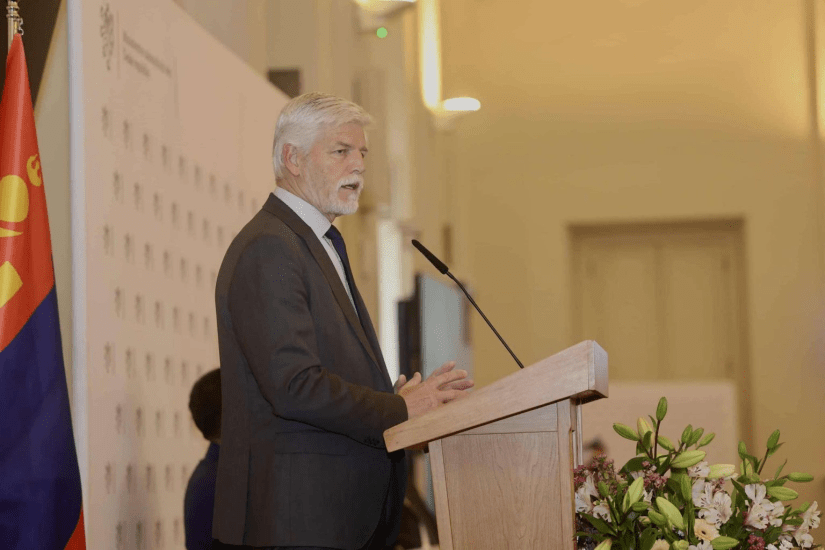
Mongolia’s upgrade in bilateral relations with Czechia is an illustration of Ulaanbaatar’s expanding third neighbor ties. As Mongolia’s third neighbor policy supports strengthening economic cooperation with partner countries, another important element is to seek access to other markets, in this case, Eastern Europe and the European Union.
Czechia’s strong economic relations with the EU is a gateway Ulaanbaatar can utilize. As of 2023, Czechia’s 81.4 percent of export goes to the EU member states, and imports 72.8 percent. The remarkable trade policy and the niche market can be beneficial to Mongolia’s third neighbor export goals.
To Czechia, Mongolia’s mining and agricultural sector has been of great importance. In March, Ulaanbaatar and Prague signed three-year agreements on geological cooperation which involves a “geological mapping and general prospecting at a scale of 1:50,000 in selected areas in Munkhkhairkhan, Zereg, and Mankhan soums of Khovd aimag and the Mongolian Altai sites.” Czechia was also amongst the few early countries that have invested in Mongolia’s uranium.
To Mongolia’s foreign policy, high-level state visits and the establishment of strategic partners are designed to uphold geopolitical equilibrium, balancing between two major powers–Russia and China—while reinforcing Mongolia’s unique diplomatic and economic position. Mongolia’s pro-engagement foreign policy has managed to cultivate a unique diplomatic niche by developing robust and longstanding ties with global partners.
As Mongolia and Czechia celebrates the 75th diplomatic anniversary, Prague is currently hosting the International Chinggis Khaan International Exhibit, at the National Museum. Ambassador of Mongolia to Czechia Gansukh Damdin noted that Mongolia and Czechia will intensify their cooperation within the framework of the EU-Mongolia partnership, including the Global Gateway. Cooperation projects such as Agreement on Education will further support the scholarship programs “Mission 2100” for Mongolian students to obtain higher education in Czechia.
 Арктус Аналитикс ХХК
Leave a comment