
Bolor Lkhaajav | Policy Consulstant, Op-Ed Contributor – Arctus Analytics
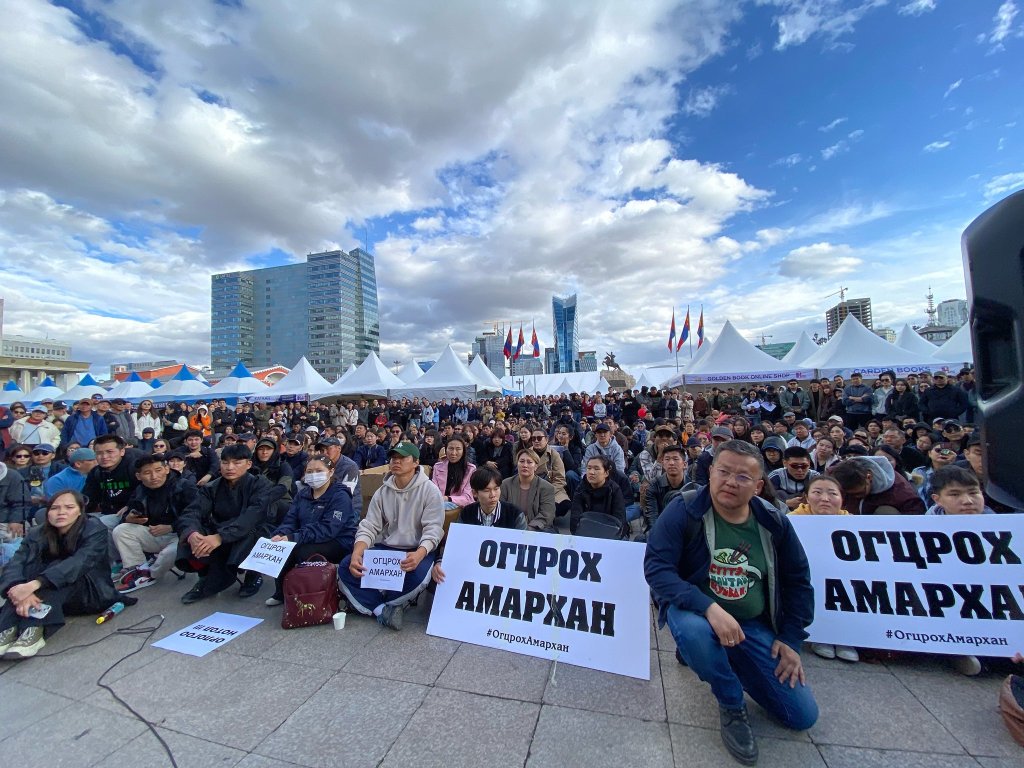
After a week of youth protest demanding the ousting of the Prime Minister Oyun-Erdene Luvsannamsrai, Mongolia’s political atmosphere took a sharp turn as instability mounts. The peaceful demonstrations at the Sukhbaatar Square reminded policymakers that Mongolia’s young population is paying attention and will not sit idle nor silent. They call for social justice for equal opportunity, financial transparency, an end to corruption, and to simply have a healthier and happier future. As legitimate and organic the protest can be, the dissolution of the coalition government, shuffling of government leaders is an indicator of Mongolia’s unhealthy political environment and instability.
Second week of May, a public outrage erupted after a social media post of the Prime Minister Oyun-Erdene’s son’s lavish birthday and a fancy engagement proposal. Although this is a private citizen’s personal matter, the Office of the Prime Minister, being a high public office, is open to public scrutiny. Outraged young Mongolians, connected and mobilized a week-long peaceful protest vis-a-vis social media platform. Having spent half their lives on a variety of social media platforms, the digital protest model quickly mingled with AI, creating a song, and a mix of videos from the protest, creating a more of an entertainment element which attracted even more people to join their cause. As days went on, the crowd became more diverse as students, academics, professionals, activists, retirees all showed up in support. They, too, had their own concerns to voice.
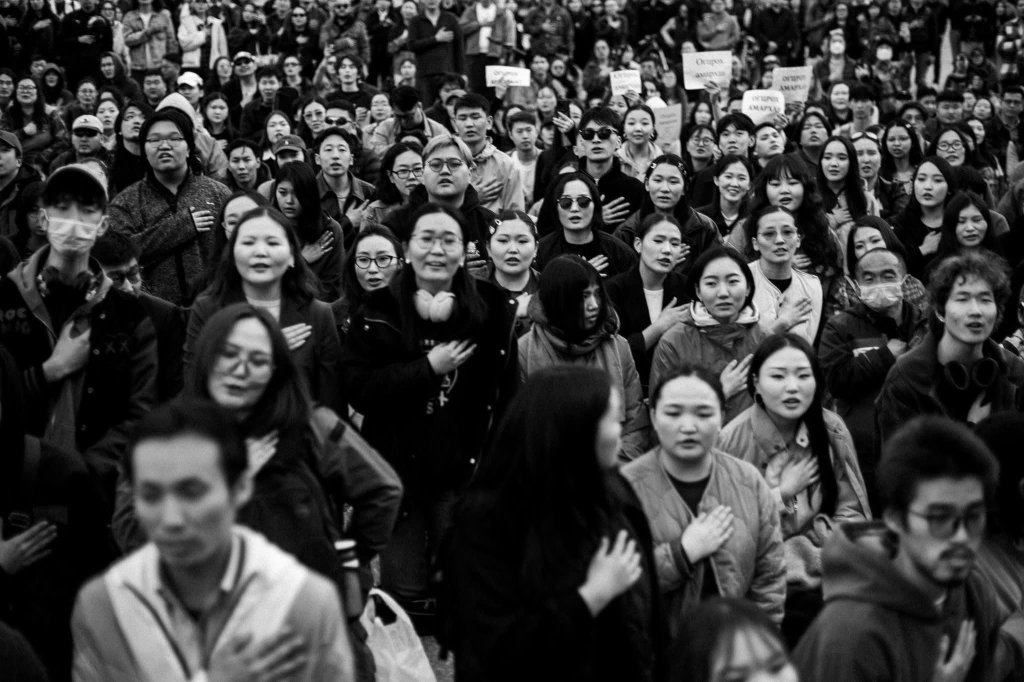
The large gathering of the diverse people not only highlighted Mongolia’s democracy and rights to assembly, but on a social level, it was a clear illustration of the country’s income inequality, social disparities, taxation without representation, and the prolonged unhealthy living environment, which the young and the elderly have endured. Only this time, the general population of Mongolia—with the exposure to social media— witnessed a stark difference in lifestyles, living expenses, and the unequal opportunities. The Mongolian youth reacted. They demanded financial transparency, while others called for the ousting of the whole government, led by Prime Minister Oyun-Erdene Luvsanmnamsrai.
Organizers of the protest established an Instagram account ogtsrokh_amarkhan with a hashtag which attracted more young Mongolians. To Mongolians living abroad, this was in fact turning into a Youth’s Civic Movement.
As of day six, protestor’s online presence grew to 7,129 followers and had already accumulated 40,000 digital signatures on their petition to oust PM Oyunerdene. The following days, 80,000 people signed paper resignation forms in agreement to oust the Prime Minister. To the legislatures and the government officials, ousting the Prime Minister meant toppling of the coalition government. There had to be a way to save the government, but the PM might have to go. Politics were now at play.
Parliamentary members, concerned with the protest, began to speak up but were hesitant to show full support for overthrowing the coalition government, fearing political instability. This is a legit concern. Some legislatures referred to the law and the justice system of Mongolia and that they will investigate the matter in collaboration with the country’s Anti-Corruption Agency. While others, especially the Democratic Party caucus joined the youth cause.
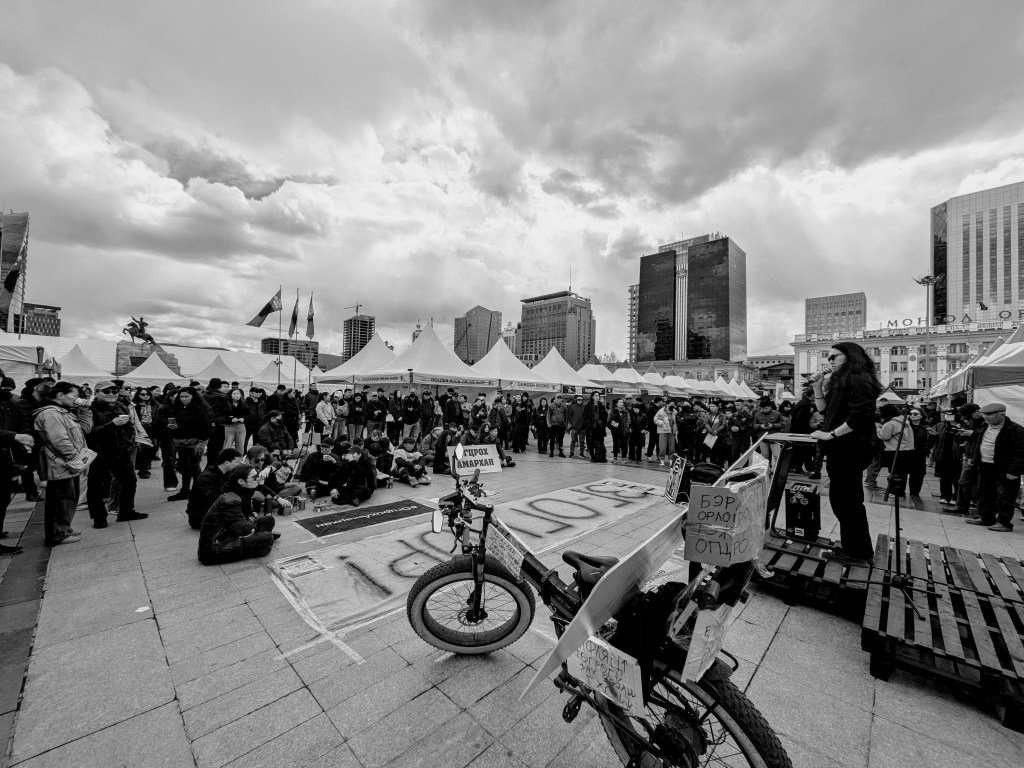
Speaking to journalists, young protestors voice their concerns for a variety of social issues. Young families worry about access to equal and quality health care. Students mention tuition, high living expenses in Ulaanbaatar, while managing the social pressure to study abroad for advanced degrees for a better future and a career. To many young people, building a healthy family in Mongolia has been a difficult decision due to many of the prolonged environmental and health problems, corruption, and air pollution.
A Mongolian guy, 25, speaking to the media, “I have been working since 18. Half of my income is spent on rent, as it is very high in Ulaanbaatar. I feel that the lavish lifestyle of politician’s kids and the way they spend tax-payers money is unfair and unjust. I couldn’t take it anymore.”
While the mobilization of the peaceful protest marks Mongolia’s democracy and its youth are active and engaged, the Prime Minister’s response, the future of his coalition government, and the stability of the Mongolian government was equally important.
Since Mongolia’s democratic revolution in 1991, the Mongolian government has struggled to maintain a stable government. Finding a strong, stable, continued government has been a hectic journey for Mongolia’s intellectuals and those who want the country to move forward without interruptions.
After days of being silent, Oyun-Erdene responded to the public’s demands. Speaking to TengerTV and a few press representatives, the Prime Minister touched on several issues including his financials, a new legislation proposal that makes it legal to confiscate politician’s corruption money if proven. He sent a strong message to the naysayers and the political faction that had been systematically working against his government and undermining their achievements.
Oyunerdene, apologizing to the Mongolian people for disheartening their trust and that if there are any irregularities in his financial statement, he will, without a protest, resign. He stressed that the matter was personal and said his son had not asked for any financial support. But the Prime Minister also mentioned something that he had not declared publicly before.
He stated that since he took office as PM in 2021, the coalition government has faced politicization of his government’s activities and achievements. (This is not a new behavior either; ex-Prime Minister of Mongolia, Saikhanbileg Chimed’s government experienced the worst case as he once stated, ‘how to govern in between chopping scissors.’) For example, the Mongolia-China railroad agreement, Gashuunsukhait-Gantsmod did not receive much attention as it deserved, being one of Mongolia’s major development mega-projects. He then insinuated that there was a systematic effort in undermining his government. He pledged his determination and that the naysayers will not and cannot stop him.
It seemed that the original concern for financial transparency has quickly turned into ousting of the whole coalition government just within a few days.
Prime minister Oyunerdene’s statement certainly carried a political element, whether a power play within the MPP or the sheer fact that the coalition government, HUN Party, Democratic Party, and MPP was falling apart from within, or by outside pressure.
In a combative tone, Oyunerdene defended his government’s achievements and raised concern for an engineered blockage to government’s activities and agendas, such as the Sovereign Wealth Fund law.
From a political analyst’s point of view, although newer initiatives are and have been proposed by the coalition government, corruption index did not improve, nor the public has heard or seen improvement in the handling of cases such as the ‘green bus’ fiasco. The social disparities and income inequality are so stark in Mongolia’s 3.4 million population that the fact that the young people simply do not believe the government is a major issue.
On May 23, the Mongolian People’s Party’s VI Congress was held amid protests. As a party leader, Oyunerdene made a political statement and announced that he will be stepping down, accepting responsibility. The Congress also announced the exiting of the Democratic Party from the coalition government. On May 26, “the Democratic Party has formally demanded that the Mongolian People’s Party (MPP) provide a written explanation and public apology for its abrupt decision to remove DP from the coalition government without official notice. In a letter sent to the MPP, DP said the move was politically irresponsible and damaged its reputation by falsely accusing it of violating the coalition agreement.”
Moreover, DP also called for continued respect for policy continuity and warned it would take further public action if its demands were not met.
While considering the protest as a healthy democratic function, where the youth assemble and voice their concerns, there is a legit concern for the stability of the Mongolian government. After all, this is not the first time the government has been toppled and shuffled. The recent political crisis is one of the most serious public backlash episodes during Oyunerdene’s tenure—currently serving 4 years—the longest in modern Mongolia’s political history.
The coalition government which had been a fresh face for Mongolia, has aimed to diversify the country’s mining-dependent economy, increase foreign investments, and proactively expand Ulaanbaatar’s foreign policy. While the youth protest is indeed a movement of the people, demanding a just society, the reshuffling of government, the dissolution of the coalition government, the exit of the Democratic Party from the coalition government signals instability and political games. The repercussions for recent events, Mongolia, once again need to convince global partners that it is a stable, legit government that can deliver on their promises.
As Mongolia braces for government change, this round’s youth protest once again highlighted Mongolia’s democracy, but the power of assembly and mobilization equally embraced the digital era. Clay Shirkey, in “Here Comes Everybody” wrote that “Revolution doesn’t happen when society adopts new technology, it happens when society adopts new behavior.” The young protesters, occupying the Sukhbaatar Square for days, exercised their democratic rights to assembly, expression, and the right to democracy, but whether this is a new social behavior remains to be seen. What is certain is that Mongolia’s political leadership now faces a reinvigorated, watchful public, one that will no longer stay silent.
As of May 25, the protest is continuing for the 12th consecutive day and the Instagram page has 11.3k followers, multiplied since day four of the protest. What is also equally important to note is that the youth protest has been inclusive, showing solidarity with the working class.
Bolor Lkhaajav is a researcher specializing in Mongolia, China, Russia, Japan, East Asia, and the Americas.
 Арктус Аналитикс ХХК
Leave a comment