
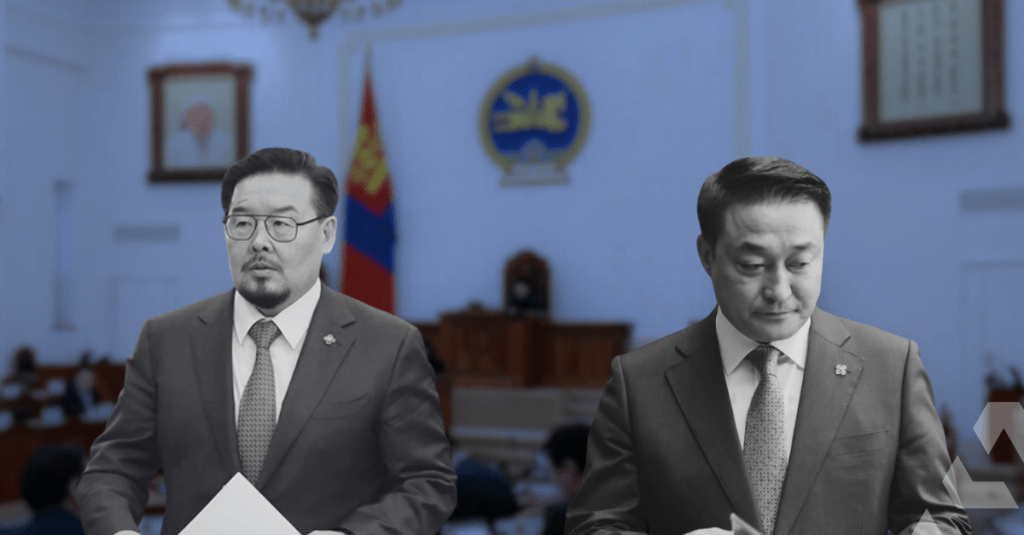
Citizens, caught in the midst of a deepening political crisis, now look to the formation of a coalition government as their best hope for stability.
By U.Orgilmaa
Translated and edited by Arctus Analytics. The views expressed in this article are those of the author and do not necessarily reflect the position of Arctus Analytics.
Doctors and teachers are protesting in the streets for higher wages, while political institutions appear increasingly divided. Within a single day, Mongolia dismissed both its Speaker of Parliament and its Prime Minister, triggering one of the most serious political disruptions in recent years. The impact on public-sector employees, pensioners, and families reliant on state payments could be immediate, as fiscal decisions remain on hold.
Around the world, governments are managing geopolitical tensions and economic volatility. Mongolia, by contrast, now faces a domestic political power struggle at a time when its economy has just begun to show signs of recovery.
How the Crisis Unfolded
The current turmoil stems largely from a leadership dispute within the ruling Mongolian People’s Party (MPP). Tensions escalated after Prime Minister G.Zandanshatar publicly accused Parliament Speaker D.Amarbayasgalan of links to the so-called “coal theft” scandal.
Since its formation, the Zandanshatar government has prioritized increasing budget revenue through coal exports. It appointed a “special representative team” to oversee operations at the state-owned Erdenes Tavan Tolgoi, which included experts from across the coal industry. Coal exports rose sharply during this period.
In parallel, the government revived investigations into previous “coal theft” cases, pledging to prosecute any wrongdoing. When it was alleged that an associate of Speaker Amarbayasgalan might be connected to the investigation, divisions within the ruling party deepened and the political crisis escalated.
A Leadership Rift Inside the Ruling Party
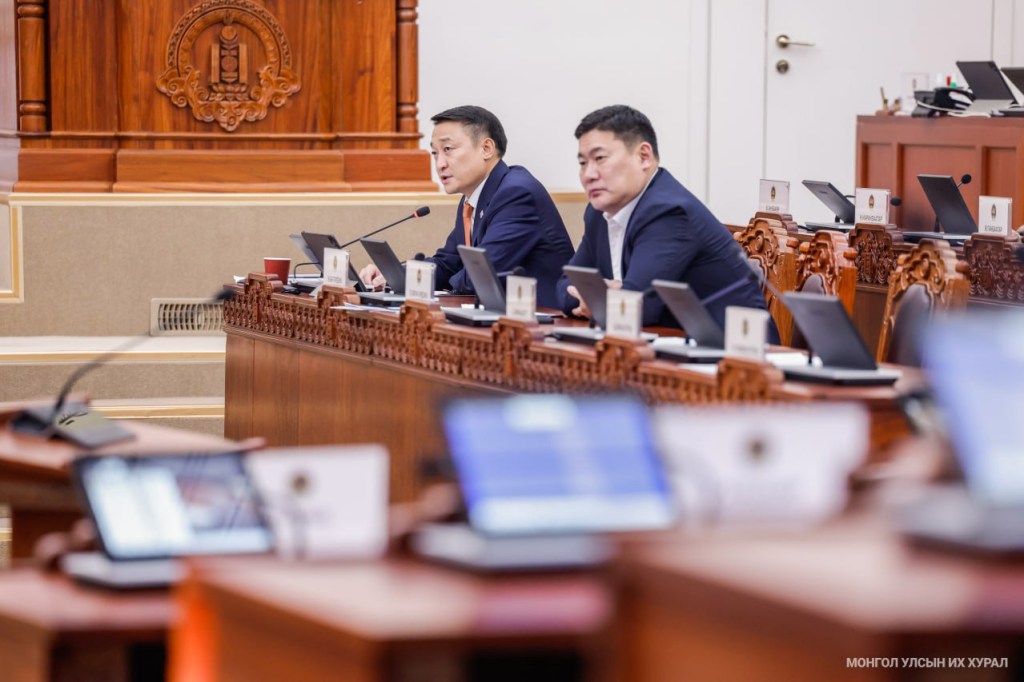
The dispute traces back to the September 2025 leadership election of the MPP, in which both Zandanshatar and Amarbayasgalan competed. Amarbayasgalan won majority backing pending confirmation by the MPP Congress scheduled for November. As of mid-October, however, the party congress had not met and the Supreme Court had not registered the leadership change, meaning former Prime Minister L.Oyun-Erdene remains the party’s officially recognized chair.
This procedural uncertainty and rivalry between senior leaders culminated in the rare event of Parliament dismissing both its Speaker and the Prime Minister on the same day. Observers have described the situation as a constitutional impasse driven by internal party divisions.
Markets Do Not Wait for Political Stability
After the 2019 constitutional amendment expanded Parliament to 126 members representing five parties and coalitions, the MPP – holding 68 seats – formed a coalition government following the 2024 election to ensure continuity for major national projects.
That coalition initially restored investor confidence. Foreign partners renewed interest in Mongolia’s long-term projects: French President Emmanuel Macron’s visit launched a uranium mining partnership between Orano Mining SAS and Erdenes Mongol, while high-level exchanges with China advanced long delayed cross-border rail links essential for export growth.
The momentum extended to international finance. Moody’s Ratings recently upgraded Mongolia’s credit rating from B2 to B1 with a “Stable” outlook, citing diversification in mineral exports. Despite global commodity headwinds, coal prices falling 30 percent last year and a further 27 percent this year, higher copper exports and confirmed reserves of 3.1 million tonnes of rare-earth ore helped sustain optimism.
Those gains are now at risk. With both the Speaker and Prime Minister removed, the government was unable to finalize the 2026 state budget. Public servants face uncertainty over salaries if the budget is delayed, and investor sentiment has weakened. Mongolian government bond prices, which had been improving, have started to fall again.
Each autumn, governments worldwide court investors by presenting new development projects. Mongolia had planned to showcase initiatives in oil processing and energy to reduce import dependence. Yet, the current instability makes these efforts more difficult.
Political uncertainty, leadership change, and collapse of the Cabinet have created hesitation among investors and partners who were only recently regaining confidence in Mongolia’s policy direction.
The Path to Restoring Stability
Public attention has now turned to President U.Khurelsukh, who is expected to play a central role in re-establishing government stability. Citizens hope that the next cabinet, likely a coalition, will include capable and impartial figures who can address urgent issues such as ending the teachers’ and doctors’ strikes and securing passage of the national budget.
Observers view President Khurelsukh as a key institutional actor with the experience and authority to guide political reconciliation and enable the government to function effectively until the next election cycle.
Conclusion
Mongolia’s recent achievements, including rising exports, an upgraded credit rating, and revived foreign investment interest, are being tested by renewed political volatility. The episode underscores how fragile economic optimism can be when political continuity breaks down.
Restoring a functioning cabinet, approving the national budget, and signaling policy stability to investors will be essential for safeguarding Mongolia’s economic progress in the months ahead.
 Арктус Аналитикс ХХК
Leave a comment