
by B.Khaliunaa
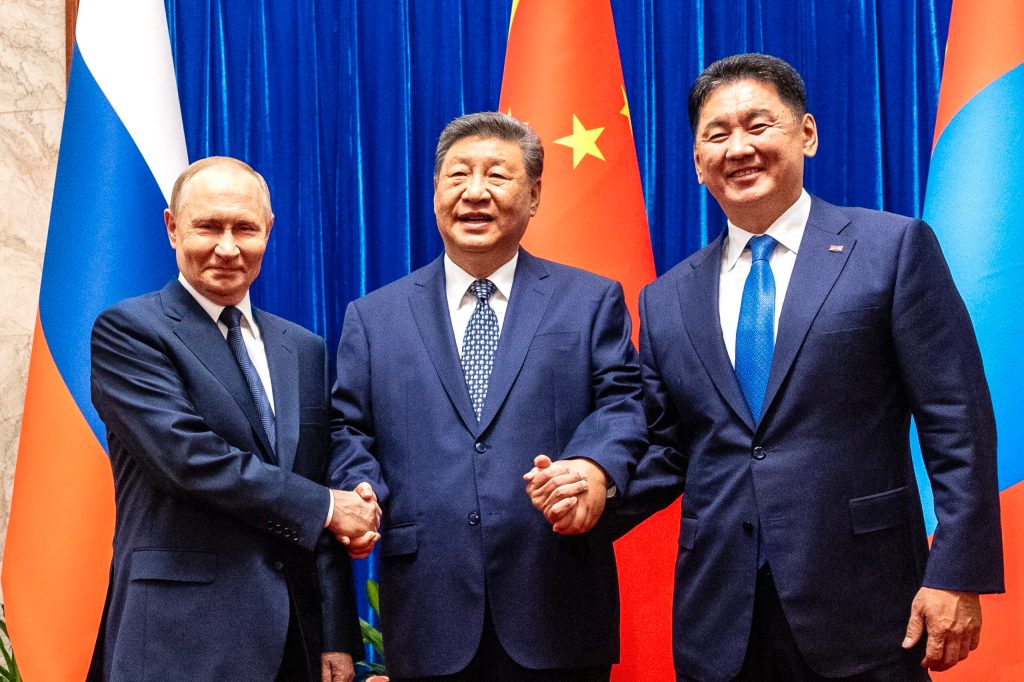
As China’s economic centrality becomes unavoidable, Mongolia’s Third Neighbor Policy is evolving from a geopolitical balancing strategy into a strategy designed to preserve Mongolia’s autonomy.
A Changing Strategic Environment
For more than three decades, Mongolia’s foreign policy has been guided by a dual objective: maintaining stable relations with its two immediate neighbors while cultivating deeper engagement with a diverse group of “third neighbors,” including the United States, Japan, South Korea, the European Union, and others. This approach emerged in the aftermath of the Cold War as Mongolia sought to preserve its sovereignty, expand its diplomatic space, and avoid excessive dependence on any single external actor.
The rationale behind the Third Neighbor Policy has remained remarkably durable. Despite changes in government, shifts in regional geopolitics, and fluctuations in relations with major powers, successive Mongolian administrations have continued to view diversified external partnerships as essential to preserving sovereignty and strategic autonomy. As a result, the policy has remained a central pillar of Mongolia’s foreign policy for more than three decades. The strategic environment surrounding Mongolia, however, has changed significantly in the last decade. China’s economic influence across Eurasia has expanded through trade, infrastructure, industrial supply chains, and regional connectivity initiatives, while Russia’s economic relationship with China has become increasingly asymmetric following Western sanctions and the reorientation of Russian trade after the invasion of Ukraine.
These developments raise an important question: what role does the Third Neighbor Policy serve in an era when Mongolia’s principal challenge is no longer geopolitical isolation, but growing economic concentration?
The conventional interpretation of the policy emphasizes balancing. Yet, balancing is becoming a less convincing explanation for Mongolia’s foreign policy today. Ulaanbaatar is neither seeking to contain China nor build an alternative geopolitical bloc. Instead, Mongolia is increasingly focused on preserving flexibility in a regional order where China’s economic influence is becoming harder to avoid.
As China’s economic importance becomes increasingly unavoidable, the Third Neighbor Policy is evolving from a balancing strategy into a diversification strategy. Its primary purpose today is not to counter China’s rise, but to ensure Mongolia retains economic and diplomatic options in a more China-centred regional order.
China’s Growing Economic Gravity
China’s importance to Mongolia extends far beyond conventional bilateral relations. It is Mongolia’s largest trading partner, principal export market, and the destination for most coal, copper, and mineral exports. In 2025, 89.4 percent of Mongolia’s exports were destined for China, while mineral products accounted for 99.2 percent of total exports, with coal, copper and molybdenum concentrates, fluorspar, iron ore, zinc ore, and crude oil making up the overwhelming majority of export earnings. China also accounted for 40.7 percent of Mongolia’s imports, underscoring the depth of economic integration between the two countries. This concentration has created significant opportunities for growth, but it also means Mongolia’s economic performance remains closely tied to demand conditions and policy developments in China.
This reality was evident during Chinese Foreign Minister Wang Yi’s recent visit to Ulaanbaatar, where discussions focused on trade expansion, border infrastructure, connectivity, critical minerals, renewable energy cooperation, and major cross-border projects, including the Gashuunsukhait-Gantsmod railway. Both governments reaffirmed their commitment to deepening cooperation under the Comprehensive Strategic Partnership, reflecting China’s increasingly central role in Mongolia’s economic development.
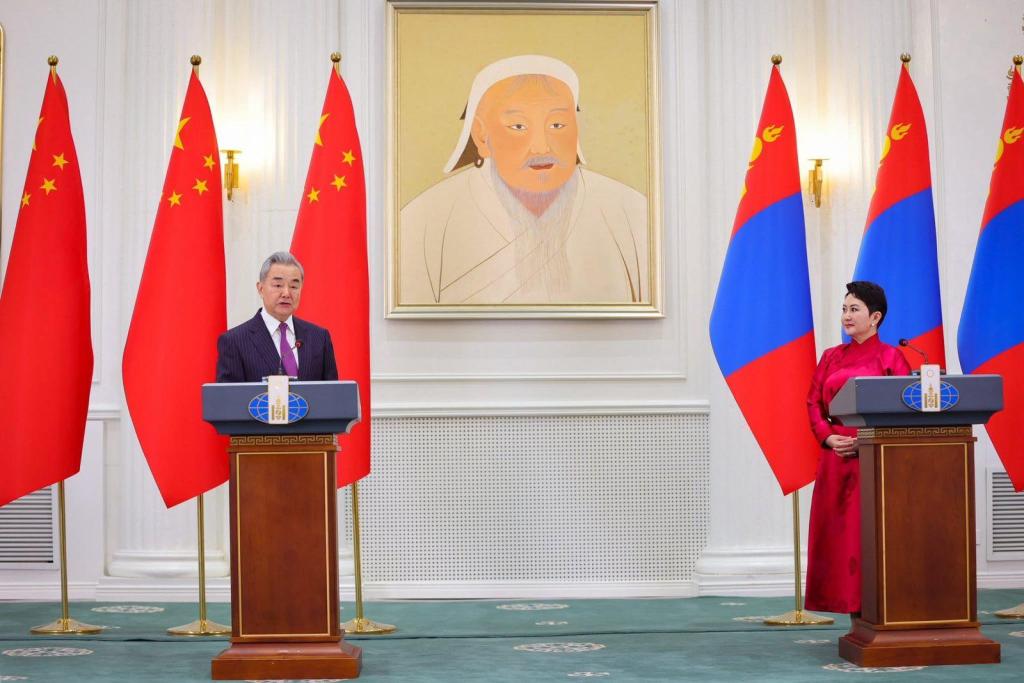
Wang Yi’s visit was significant not because of any single agreement, but because it highlighted the realities of Mongolia’s evolving strategic environment. China now occupies a central place in Mongolia’s economic geography. For policymakers in Ulaanbaatar, the question is no longer whether ties with China should deepen, but how deeper integration can be managed without creating excessive dependence.
Economic ties do not automatically lead to political dependence. However, when trade, infrastructure, and export markets become concentrated in a single partner, they can gradually narrow the choices available to smaller states. Mongolia’s challenge is therefore not how to avoid China’s economic influence, but how to benefit from it while preserving sufficient room to pursue an independent foreign and economic policy.
Why the Third Neighbor Policy Still Matters
Viewed through this lens, the Third Neighbor Policy remains highly relevant, but for different reasons than when it was first conceived.
As China’s economic influence grows, diversification becomes more important, not less. Third-neighbor partnerships provide alternative sources of investment, technology, market access, and institutional cooperation. They cannot replace China as Mongolia’s dominant economic partner, but they can help ensure that Mongolia’s development is not tied too closely to any single country.
This is not a strategy of containment or balancing in the traditional geopolitical sense. Rather, it is a strategy for preserving options. By maintaining strong relationships with a diverse group of partners, Mongolia can reduce concentration risk and retain greater flexibility in pursuing its economic and foreign policy priorities.
Critical Minerals and the New Strategic Competition
Critical minerals are making Mongolia more strategically important and increasing the need for diversification.
Mongolia possesses significant deposits of copper, uranium, rare earth elements, fluorspar, and other minerals increasingly viewed as essential for clean energy technologies, advanced manufacturing, artificial intelligence infrastructure, defense industries, and broader industrial transformation.
Thus, the country’s strategic relevance stems not only from the resources themselves, but from their growing importance to global supply chains. China remains the dominant destination for Mongolia’s mineral exports and the primary market for its coal and copper. At the same time, governments in the United States, Europe, Japan, South Korea, and India are seeking to diversify access to critical resources and reduce dependence on China-centred supply chains.
Recent diplomatic engagement reflects this trend. During Indian External Affairs Minister Subrahmanyam Jaishankar’s June 22-23 2026 visit to Mongolia, the two sides discussed expanding cooperation in mining, critical minerals, and economic connectivity. Similar discussions have emerged in Mongolia’s engagement with Japan, South Korea, the European Union, and the United States, all of which have identified supply-chain resilience and critical minerals as growing areas of interest.
However, resources alone do not automatically translate into strategic leverage. Mongolia faces several structural constraints, including limited domestic processing capacity, dependence on cross-border transport infrastructure, financing requirements for large-scale projects, and heavy reliance on a single export market. Developing critical mineral value chains therefore requires not only natural resources, but also sustained access to technology, capital, infrastructure, and international markets.
This is where the Third Neighbor Policy becomes increasingly relevant. As competition over critical minerals intensifies, Mongolia’s challenge is not to align with any particular bloc, but to attract investment and cooperation from a diverse range of partners. Diversification allows Mongolia to benefit from growing demand for strategic resources while reducing the risks associated with excessive dependence on any single market or supply chain.
Strategic Autonomy Through Diversification
Recent trade patterns illustrate both the opportunities and risks created by Mongolia’s economic geography. In April 2026, Mongolia briefly overtook Indonesia as China’s largest monthly coal supplier after shipments increased by 61 percent year-on-year.
These figures highlight a central reality: Mongolia’s economic success remains closely linked to Chinese demand. Geography places clear limits on how far trade can be diversified away from China. The more realistic objective is not to reduce economic ties with China, but to broaden the range of partners involved in Mongolia’s development through investment, technology, mineral processing, renewable energy, logistics, and industrial cooperation.
From this view, the success of the Third Neighbor Policy depends not only on diplomacy but also on domestic reforms that make Mongolia a more attractive destination for long-term investment. Recent discussions surrounding amendments to the Minerals Law reflect broader efforts to strengthen domestic capacity while increasing the benefits retained from strategically important resources.
Conclusion
The future relevance of Mongolia’s Third Neighbor Policy will not be determined by its ability to balance China. China will remain Mongolia’s dominant economic partner for the foreseeable future. The more important question is whether Mongolia can diversify enough to prevent economic concentration from becoming strategic dependence.
In that sense, the Third Neighbor Policy is no longer primarily about balancing power. It is about preserving options. As China’s economic influence continues to grow, the policy’s value lies in ensuring that Mongolia remains connected to multiple sources of investment, technology, and political support. In a more China-centred Eurasia, strategic autonomy will depend less on maintaining distance from major powers than on maintaining choices among them.


Leave a comment