
By U.Orgilmaa | Journalist, Op-Ed Contributor
Editor’s note: Translated and edited by Arctus Analytics. The views expressed in this article are those of the author and do not necessarily reflect the editorial position of Arctus Analytics.
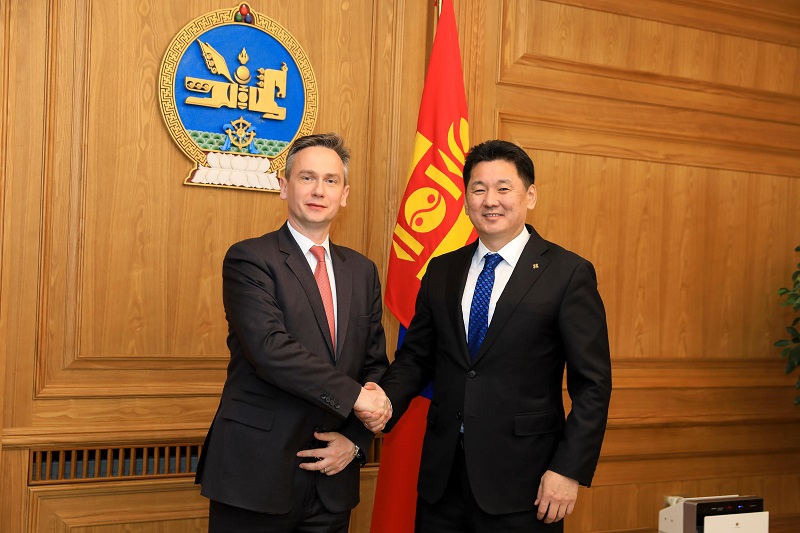
Yesterday marked the final day of the seven-year window for discussing the shareholder loan interest rate with the investor side of the Oyu Tolgoi project. After meeting for two consecutive days, with breaks in between, the National Security Council gave Prime Minister N.Uchral a firm set of demands to take into the negotiations.
In those demands, the Mongolian state appeared to show not the attitude of a passive partner, but the attitude with which other countries view, engage with, and assess Rio Tinto. The message was direct: “It has become difficult to tell whether your company is engaged in mining or finance. Oyu Tolgoi appears to be producing debt rather than benefits,” reflecting long-standing criticism and demands from civil society groups and the Mongolian public.
In the section titled “Grievance,” the Mongolian side argued that although the agreement was supposed to provide Mongolia with 53 percent of the project’s benefits, the country had received only 25–31 percent over 17 years, mainly through taxes, and had not received dividends.
The letter also noted that, compared with 17 years ago, Mongolia now has many more young professionals who are educated and capable of negotiating with investors on equal terms. One could read this as a suggestion that even those considered the most capable negotiators at the time of the original agreement have become outdated along with the agreement itself.
More importantly, the Prime Minister’s message appeared to recognize the criticism from civil society groups as legitimate demands based on research, calculations, fairness, and the principle of mutually beneficial cooperation.
This is an important change. In the past, successive prime ministers often seemed hesitant when faced with civil society criticism over Oyu Tolgoi. Instead of using those voices to strengthen Mongolia’s negotiating position, they sometimes appeared caught between public pressure and Rio Tinto. This time, the government placed a clear demand on the table and then moved the negotiations behind closed doors.
Normally, in such a political drama, the public would be left waiting while the suspense builds. Instead, before the country had even fully absorbed the fact that Mongolia had issued a firm demand, the curtain opened again: the investor side had accepted it. The announcement of victory came almost too quickly.
This brings to mind a recent remark by former Prime Minister G.Zandanshatar, a statesman known for his interest in chess. He said that one does not win by keeping the strongest pieces far apart on the board. One wins by connecting all the pieces, large and small, and moving them together. The same is true for cooperation between states.
Mongolia’s own “pieces” deserve recognition. The Oyu Tolgoi agreement signed in 2009 should not simply be judged from today’s vantage point and condemned in hindsight. It should be corrected and improved over time. That is how a state should act.
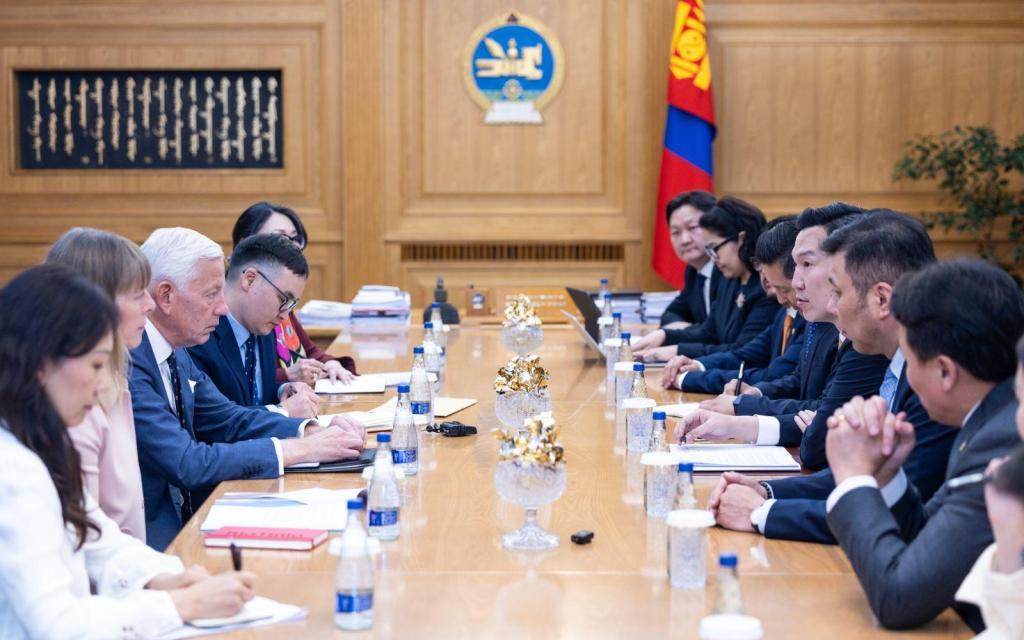
Officials presented the latest agreement as generating USD 6.2 billion, or MNT 22 trillion, in savings from debt and loan payments that would otherwise have been made from Oyu Tolgoi’s wealth. Finance Minister Z.Mendsaikhan, visibly pleased, said, “I love my country,” and went to the Prime Minister. The Prime Minister went to the President and the Speaker of Parliament. This is how Mongolia’s institutions should work when the national interest is at stake.
The role of Speaker S.Byambatsogt may not yet be fully visible. But it will likely become clearer when the National Security Council reports to Parliament in accordance with the law.
The most interesting role, however, appears to have been played behind the curtain by the head of the National Security Council. When President U.Khurelsukh was Prime Minister, he received then-Rio Tinto Chief Executive Jean-Sébastien Jacques on January 24, 2018, and delivered a message very similar to the one Prime Minister N.Uchral has now expressed.
Compared with the more deferential tone shown by some previous prime ministers toward Rio Tinto, U.Khurelsukh’s approach at the time was notably firm. He reportedly pressed the company by saying that certain changes were necessary and that the time had come. His phrase, “The owner knows his property, and the riverbank contains the water,” remains memorable.
Now, as President and head of the National Security Council, U.Khurelsukh appears to have brought the issue close to the council’s table, held it there for two days, and then sent the Prime Minister into negotiations with essentially the same demand he had voiced eight years earlier. In less than an hour, Rio Tinto’s leadership accepted changes to an agreement that had been treated for 17 years as if it could not be touched.
As a result, Mongolia may receive shareholder distributions before 2027, rather than waiting until 2037.
It is also important to remember the progress made during the government of former Prime Minister L.Oyun-Erdene. During that period, Rio Tinto agreed to cancel USD 2.3 billion in debt related to Mongolia’s 34 percent share in the Oyu Tolgoi project, creating the basis for Mongolia to eventually receive dividends. That government also secured an independent expert review that challenged Rio Tinto’s explanations for the USD 2 billion increase in underground mine capital costs and the 30-month delay.
This is what it means to correct and improve an agreement over time. Mongolia should continue to raise the issue of accumulated interest as well.
Today, Mongolia is at a delicate moment. The country is actively inviting foreign investors and calling for new investment. But that does not mean it should accept terms that place the country deeper into debt. The government demanded a reduction in the interest rate on loans that were burdening Mongolia, as well as a shorter interval for reviewing the loan terms.
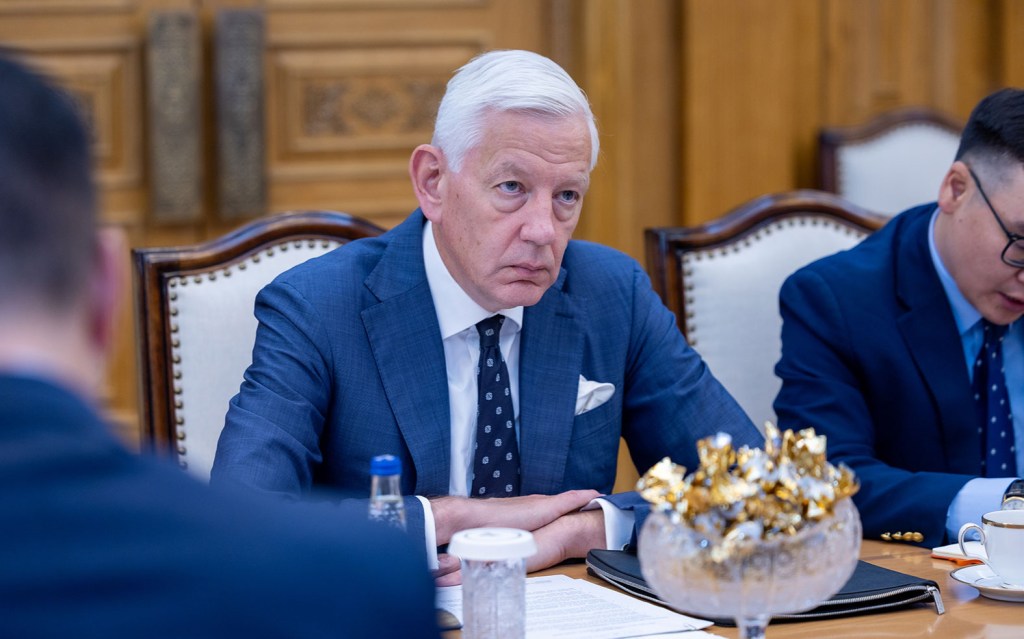
Officials presented the agreement as generating USD 6.2 billion, or MNT 22 trillion, in savings from debt and loan payments. They also said it could increase Mongolia’s benefits by USD 2.5 billion, or around MNT 8 trillion. The window for reviewing the shareholder loan interest rate, previously opened once every seven years, will now be reviewed every three years.
Most importantly, the agreement appears to open the possibility of bringing forward Mongolia’s long-delayed shareholder distributions.
The agreement, then, was not carved into stone. If Mongolia acts with unity, it can be corrected.
Naadam, one of the most important symbols of Mongolian identity, is approaching. Ahead of the national holiday marking the 2,235th anniversary of Mongolian statehood, the 820th anniversary of the Great Mongol Empire, the 105th anniversary of the People’s Revolution, and the 36th anniversary of the Democratic Revolution, Prime Minister N.Uchral’s government and the working group involved in the negotiations have delivered a significant result.
Recognition is also due to the head of the National Security Council, who appears to have played an important role behind the scenes.
The investor side, too, deserves acknowledgment for demonstrating its willingness to continue working with Mongolia and for reaching an outcome. We wish them success in their continued work.


Leave a Reply