
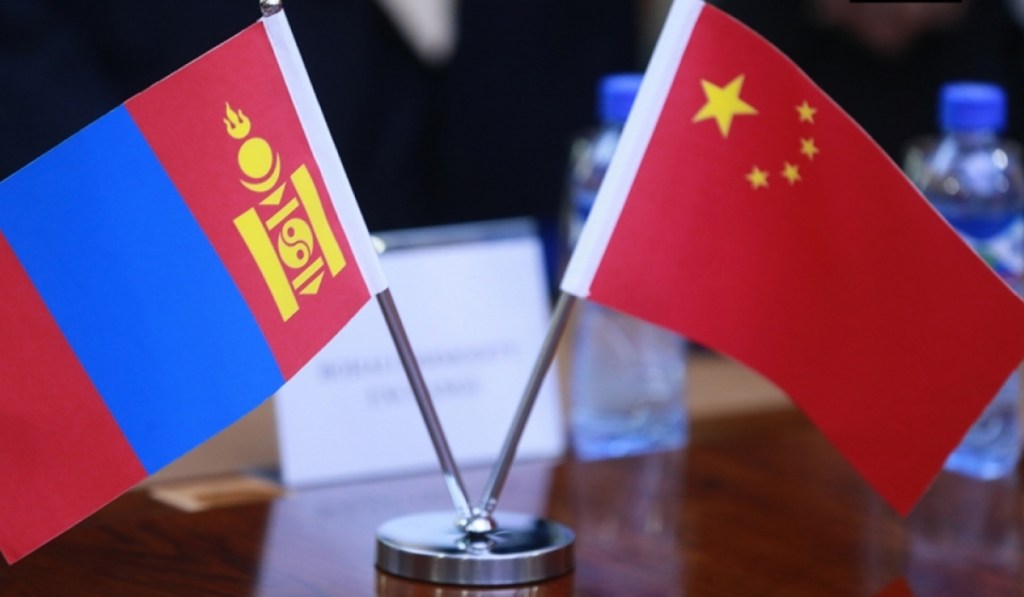
Mongolia-China Relations Are Important, but Sensitive Bilateral Issues Require Institutional Safeguards
Developing friendly, stable, and mutually beneficial relations with the People’s Republic of China is one of Mongolia’s core foreign policy priorities. China is Mongolia’s permanent neighbor, largest trading partner, and main export market. In 2025, Mongolia conducted USD 18.6 billion in total trade with China, which accounted for 89 percent of Mongolia’s total exports and 40.9 percent of its imports. Therefore, Mongolia-China relations should not be viewed only through the lens of risk and caution, but also through the realities of practical interests, interdependence, and long-term stability.
However, the need to maintain friendly relations with a neighbor should not become a reason to weaken Mongolia’s state decision-making space, foreign policy balance, or national security capacity. In particular, issues such as visa policy, cross-border movement, and Mongolia’s participation in the Shanghai Cooperation Organization (SCO) should not be viewed only within the general framework of bilateral cooperation. These issues are directly connected to national security, sovereignty, and social stability.
Therefore, while Mongolia should actively develop practical and results-oriented relations with China, sensitive issues with broad consequences should be discussed through official channels, established procedures, and coordination among relevant state institutions. For a small state such as Mongolia, diplomatic protocol, records of meetings and conversations, official translation, and the involvement of the Ministry of Foreign Affairs are not merely administrative formalities. They are important mechanisms for preserving policy continuity, independence, national interests, and historical record.
Statements by the Chinese Ambassador Raised Two Sensitive Issues
Recently, Shen Minjuan, Ambassador of the People’s Republic of China to Mongolia, has repeatedly raised two sensitive issues in interviews with the media within the context of Mongolia-China relations. The first is granting Chinese citizens visa-free travel to Mongolia. The second is increasing Mongolia’s participation in the Shanghai Cooperation Organization, including the question of formal membership.
Specifically, in an interview given in December 2024, Ambassador Shen explained that one reason the number of Chinese tourists visiting Mongolia remains relatively low compared to other neighboring countries is the absence of a visa-free policy for Chinese citizens. She stated that China was “looking forward to Mongolia easing its visa policy for Chinese tourists.” In March 2026, while briefing the media on China’s 15th Five-Year Plan, she again raised the visa issue, saying that she hoped “the Mongolian side will allow Chinese citizens to travel visa-free and create easier conditions for them to visit Mongolia.”
Regarding the SCO, after the SCO summit held in Tianjin in September 2025, Ambassador Shen expressed a position that implied increasing Mongolia’s participation in the organization. This brought renewed attention to Mongolia’s long-standing observer status and to the broader question of whether Mongolia should deepen its engagement with the SCO.
It is part of diplomacy for any ambassador to explain the policy and interests of their own country. Therefore, the above statements can be understood as normal diplomatic positions through which China is expressing its own interests. For Mongolia, however, visa policy, cross-border movement, and participation in the SCO are not issues to be considered only within the framework of tourism or friendly diplomatic relations. They are policy issues connected to security and national interests that require serious consideration. The central question is what principles and criteria Mongolia should use when responding to proposals and initiatives advanced by China.
Visa Policy Is an Issue of Mongolia’s Sovereign Authority
The above risks are most clearly visible in the issue of granting Chinese citizens visa-free travel to Mongolia. Supporting the tourism sector, increasing people-to-people exchanges, and expanding the benefits of cross-border economic cooperation are important for Mongolia. An increase in Chinese tourists would undoubtedly have a positive impact on tourism, services, and local economies.
However, the population size, market scale, and cross-border movement of citizens between the two countries are sharply different. China may raise visa-free travel as an issue of “reciprocity” or “friendly relations,” but in practice the effects are not equal. If Mongolia makes a decision on this issue, it must carefully calculate border registration, monitoring of foreign residents, and, most importantly, how the public would receive such a decision.
For example, 2025 tourism figures show that Chinese citizens already formed the largest group of foreign tourists visiting Mongolia, at 28 percent, followed by Russian tourists at 27 percent and South Korean tourists at 21 percent. Russian citizens have the right to travel to Mongolia visa-free for 30 days under an intergovernmental agreement between the two countries, while South Korean citizens have been temporarily exempted from visa requirements for tourism purposes for up to 90 days. Nevertheless, Chinese citizens, who still require visas, constituted the largest group of tourists visiting Mongolia. This suggests that a careful assessment is needed on whether the visa regime is in fact a major obstacle to attracting Chinese tourists.
Visa policy is also directly linked not only to short-term tourism, but also to residence permits and employment. As of April 30, 2026, Mongolia hosted 34,241 foreign citizens from 133 countries for official and private purposes. Of these, 21,377 were Chinese citizens residing for private purposes, accounting for 62 percent of all foreign citizens residing in Mongolia. Under such conditions, any visa-free arrangement must be a policy decision connected to the capacity of state oversight, labor market, and social services.
Therefore, the question of whether to allow Chinese citizens to travel to Mongolia visa-free cannot be decided solely within the framework of “supporting tourism” or “friendly bilateral relations,” as expressed by the Chinese side. Visa policy is not merely a question of opening the border. It is an issue of the state’s sovereign authority to regulate who may enter its territory, under what conditions, for how long, and under what form of supervision.
The SCO Issue and Mongolia’s Foreign Policy Balance
Mongolia became an observer in the Shanghai Cooperation Organization in 2004 and has maintained this status to this day. While the SCO’s core focus has primarily been on developing intergovernmental cooperation among member states in countering terrorism, religious extremism, and separatism, in recent years the organization has expanded the scope of its activities into areas such as trade, investment, and infrastructure development.
Following the SCO summit held last year, Chinese Ambassador Shen Minjuan stated that China was inviting Mongolia to expand cooperation with member states, “take one step forward and further integrate into the SCO family,” and contribute to the development of the SCO and regional integration. The fact that the Ambassador held a press briefing and made this statement even though there had been no official change to the organization’s charter went beyond a routine diplomatic invitation and signaled an effort to draw Mongolia closer to SCO membership.
In addition, Mongolia’s participation in the SCO and the issue of membership constitute a strategic decision to be considered at the highest levels of the state. They are directly linked to Mongolia’s international position, security environment, and foreign policy balance. If Mongolia were to become a member, it would need to carefully consider from multiple angles how close it would move toward its two neighbors, how it would preserve its third-neighbor policy, and what signal such a decision would send internationally.
Diplomatic Activity and the Vulnerability of the Mongolian State
It is part of diplomacy for an ambassador to express the policies and interests of their own state. Diplomatic representatives of any country seek to explain their government’s positions on trade, investment, tourism, and regional cooperation in the country where they are posted and to gain support for those positions.
However, in recent years, foreign ambassadors and diplomatic representatives have become increasingly active in engaging through multiple channels with members of Parliament, ministries, agencies, local authorities, and political figures. This is itself part of normal diplomatic activity. Yet when strategic policy issues are raised in diplomatic meetings, official protocol and coordination among institutions become more important than ever.
In addition, there have been rumors in political circles that Ambassador Shen Minjuan has met with high-ranking Mongolian political officials without protocol. If high-level meetings are held without Mongolian-side translation, without the participation of relevant institutions, and without official memoranda or meeting records afterwards, this may create misunderstandings and leave space for political or diplomatic pressure from the other side in the future.
Also, although the Chinese side has made several statements on the visa issue, the Ministry of Foreign Affairs has not publicly expressed a position. This may create suspicion among citizens that the parties have reached some kind of understanding, with or without protocol, on this issue.
Under such circumstances, the resilience of the Mongolian state and the independence of its foreign policy do not rest on grand declarations, but on the proper implementation of everyday diplomatic practice, protocol, and institutional coordination. Therefore, as Mongolia actively engages with its foreign partners, it should narrow the space for informal, undocumented, and personality-driven state policy on sensitive issues.
Why Are Meeting Records, Protocol, and MFA Coordination Important?
Records of conversations during high-level diplomatic meetings and diplomatic protocol are important tools for preserving the state’s institutional memory and policy continuity, preventing the position of the official who participated in the meeting from being misinterpreted, and later confirming and substantiating Mongolia’s official position. In particular, when meetings concern issues of major importance such as visa policy, membership in international organizations, strategic infrastructure, and investment, it must be recorded in writing within what framework the conversation took place, what position was expressed, and what was left unresolved.
Article 5.1.7 of the Law on Diplomatic Service states that the central state administrative body in charge of foreign affairs has the function of “organizing the implementation of Mongolia’s unified and continuous foreign policy and expressing the official position of the state and government of Mongolia.” Therefore, requiring MFA coordination on the above issues is consistent with the normal functioning of the state and is an important mechanism for ensuring Mongolia’s official position, foreign policy, and the unity of state action.
Accordingly, in meetings with foreign diplomatic representatives on sensitive bilateral issues, Mongolian-side interpreters and representatives of relevant institutions should participate, and an arrangement should be created whereby the Ministry of Foreign Affairs keeps the official record of the meeting afterwards. The Mongolian state should express its position only on the basis of written documents, meeting records, and confirmed official correspondence.
Policy Recommendations
If senior state officials and other public officials reach understandings with foreign diplomatic representatives on specific issues without protocol, this constitutes a violation of the law, and the resulting decision should be treated not as an official state position, but as a personal position. A legal framework should be created to ensure accountability on this issue.
In addition, high-level decision-makers such as members of Parliament, ministers, state secretaries, and agency heads should receive regular guidance from the Ministry of Foreign Affairs and other relevant institutions on diplomatic meeting protocol, information security, and engagement with foreign diplomatic representatives.
In conclusion, visa policy, the issue of SCO membership, and high-level diplomatic meetings are directly connected to Mongolian state policy, national interests, and foreign policy balance. While developing friendly, stable, and beneficial relations with China is consistent with Mongolia’s foreign policy, relations between any two countries should be conducted transparently and through official channels.


Leave a Reply